
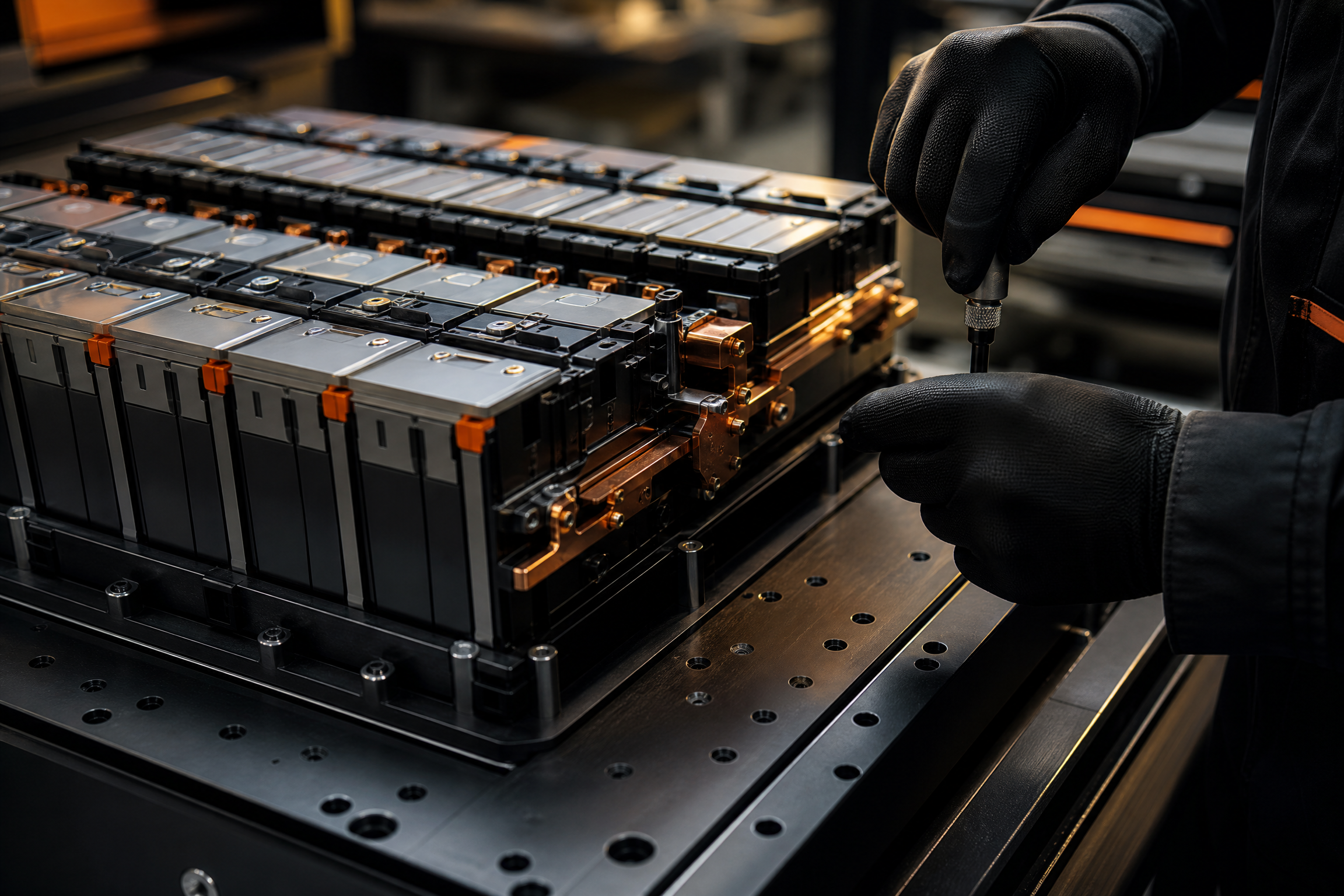
Lithium battery-pack manufacturing moves from application requirements and cell selection through electrical and mechanical design, prototype builds, testing and qualification, production planning, assembly, and quality control.
A reliable battery pack is not created at a single station. It is the result of many linked choices: the application, the cell, the enclosure, the thermal and electrical design, the manufacturing process, and the discipline used to qualify and support the product over time.
Define the application before the pack
The application creates the operating requirements. Power, energy, duty cycle, environment, size, weight, expected life, charging behavior, safety expectations, and service needs should inform the manufacturing plan from the beginning.
Match cell format and chemistry to the job
Cylindrical, prismatic, and pouch cells create different packaging, interconnect, thermal, and manufacturing considerations. Chemistry is equally application-specific. A practical manufacturing plan makes these decisions visible early and avoids treating a battery pack as a generic commodity.
Plan for production while building the prototype
Rapid prototyping is most valuable when it reveals the questions that will matter at production scale. Process capability, testing, quality checks, equipment, documentation, supplier continuity, and change control should be part of the conversation before a program reaches its first larger build.
- Battery-pack manufacturing begins with the application—not with a generic bill of materials.
- Cell format and chemistry inform the production path.
- Prototype work is strongest when it informs production decisions early.
Answers for the next decision.
Can the same manufacturing path support different lithium battery chemistries?+
The broader production approach can be designed to support different programs, but each chemistry, cell, and application has its own requirements. Manufacturing scope should be evaluated project by project.
Why does the cell format matter?+
Cell format affects the mechanical layout, electrical interconnects, thermal approach, manufacturing equipment, and service strategy. It should be a deliberate design and production choice.
When should manufacturing input enter a battery program?+
As early as possible. Manufacturing input during the prototype phase can surface sourcing, process, quality, and qualification questions before they become expensive production changes.